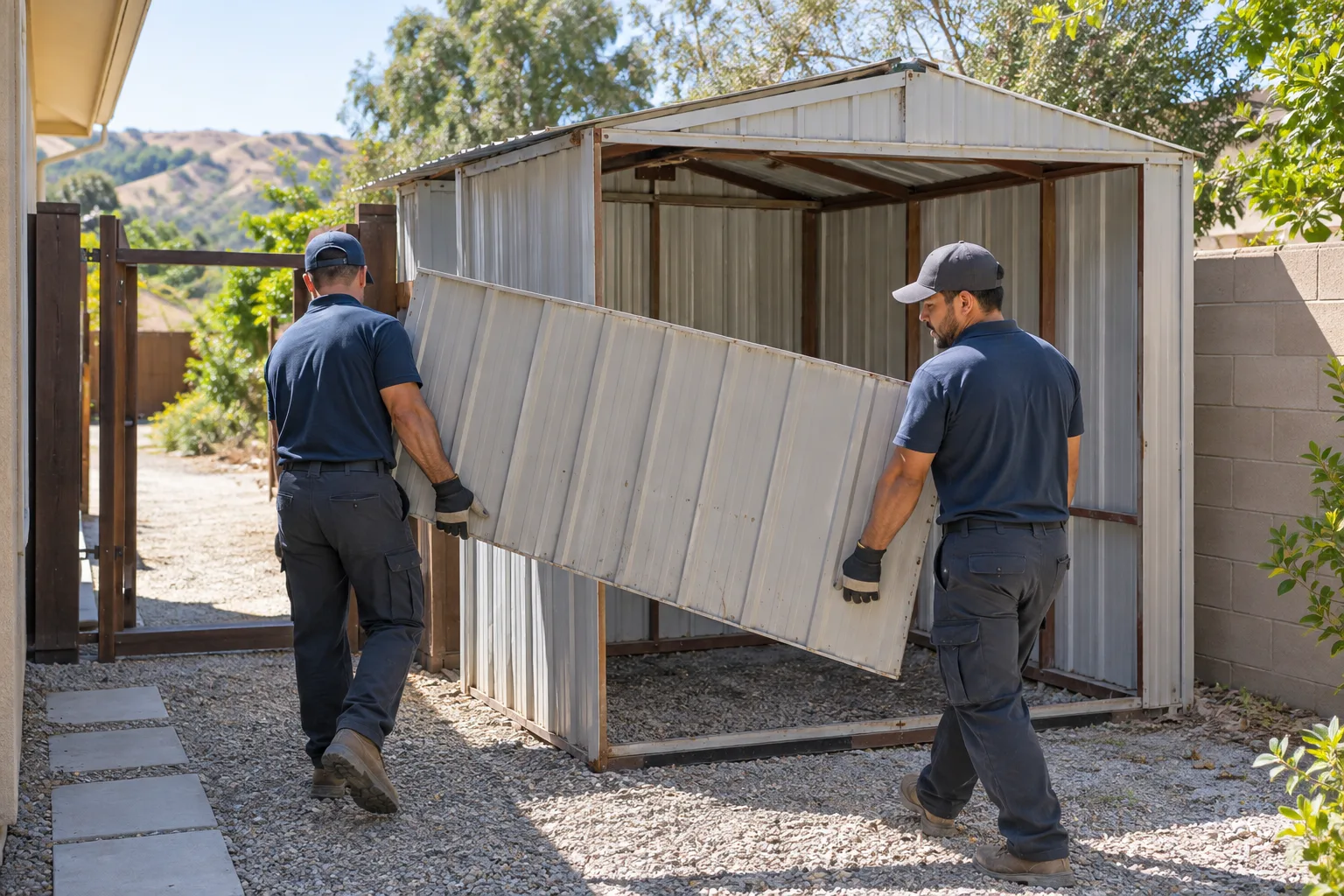
Empty the shed, identify corrosion and sharp panels, and document anchors, utilities, and the carrying route. The goal is a clear scope, not a rushed teardown.
Empty and photograph the interior
Remove personal items and excluded products before work. Wide interior photographs can show framing, built-in shelves, floor condition, and where panels connect.
Point out rust and loose panels
Corroded fasteners and thin sheet metal can fail unexpectedly or leave sharp edges. Do not tug on loose panels. Keep the area clear and show the crew every bent, detached, or wind-damaged section.
Identify anchors and utilities
Record whether the shed is bolted to concrete, fixed to ground anchors, insulated, wired, or connected to equipment. Live electrical service must be made safe by the appropriate qualified professional.
Plan for panel size and wind
Measure gates and turns and describe any exposed or windy work area. The crew decides how small panels need to become and when conditions are safe enough to handle them.
Use this decision table
| Check | Why it affects the job |
|---|---|
| Connections | Utilities and building attachments must be made safe before dismantling. |
| Below grade | Anchors and concrete may add weight, digging, and a different disposal route. |
| Access | Gates, turns, stairs, slopes, and carrying distance control section size and labor. |
| Materials | Hazardous or regulated material cannot travel in an ordinary debris load. |
Checklist to keep
- Contents and excluded products removed
- Rust and loose panels photographed
- Anchors and concrete identified
- Electrical status confirmed
- Gate and turns measured
- Wind exposure described
Review the metal shed removal service scope, then prepare the information for an estimate. A call or inquiry does not confirm an appointment.