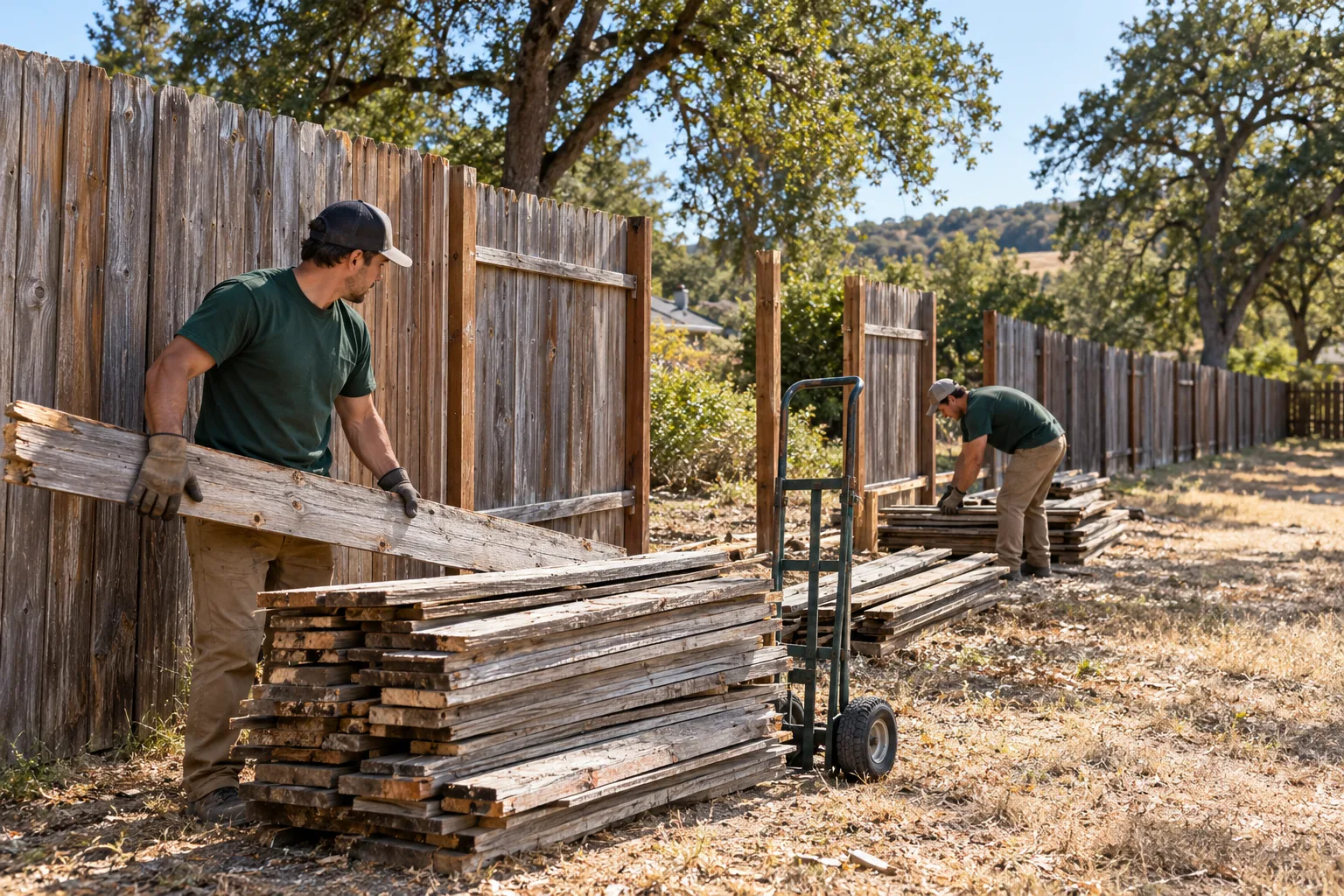
Measure gates, turns, slopes, and carrying distance before dismantled shed material is ready to load. The goal is a clear scope, not a rushed teardown.
Walk from the material to the street
Start at the shed and follow the exact carrying route. Measure the narrowest gate, note tight turns and stairs, and flag soft ground or steep slopes. A wide driveway does not help if the side-yard passage is blocked.
Choose a safe staging area
Keep loose panels, timber, and hardware together without blocking exits or walkways. Do not lean unstable stacks against fences or buildings. Tell the crew about sharp edges and keep children and pets away.
Protect what must stay
Move hoses, toys, pots, and furniture. Identify irrigation, low branches, delicate plants, exterior fixtures, and surfaces that could be damaged along the route.
Confirm legal loading access
Describe driveway width, curb conditions, parking limits, and the distance from the gate to the truck. The operator still needs to confirm where its vehicle can load safely and legally.
Use this decision table
| Check | Why it affects the job |
|---|---|
| Connections | Utilities and building attachments must be made safe before dismantling. |
| Below grade | Anchors and concrete may add weight, digging, and a different disposal route. |
| Access | Gates, turns, stairs, slopes, and carrying distance control section size and labor. |
| Materials | Hazardous or regulated material cannot travel in an ordinary debris load. |
Checklist to keep
- Narrowest gate measured
- Turns, stairs, and slopes photographed
- Sharp or unstable material disclosed
- Fragile landscaping identified
- Staging area kept clear
- Loading location confirmed
Review the shed hauling service scope, then prepare the information for an estimate. A call or inquiry does not confirm an appointment.