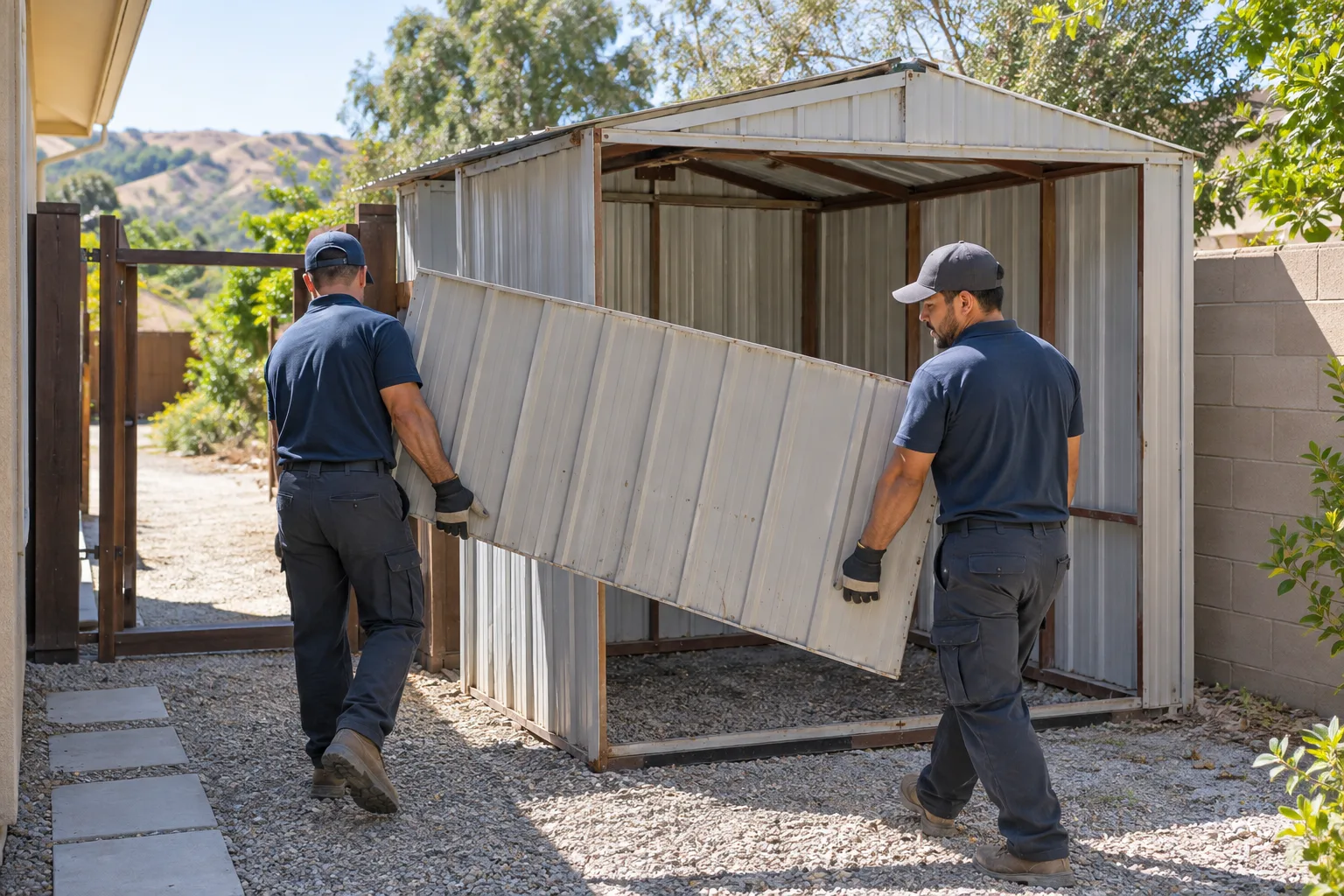
Sort personal items, remove excluded products, and expose the floor, shelving, anchors, and utility connections. The goal is a clear scope, not a rushed teardown.
Separate keep, discard, and restricted items
Remove tools, furniture, boxes, and anything you plan to keep. Set paint, chemicals, fuel, oil, batteries, and pressurized cylinders aside for an approved disposal route. Do not leave unmarked containers behind.
Make the structure visible
An empty shed lets the crew see the floor, walls, leaks, rot, corrosion, and fixed shelving. Photograph built-ins or heavy items that cannot be moved so they can be discussed before the estimate.
Check the base and utility status
Look for anchors, a concrete pad, buried edges, wiring, lights, plumbing, or equipment. Do not disconnect or disturb live service yourself; use the appropriate qualified professional.
Keep the approach clear
Move loose yard items away from the door and carrying route. Note the narrowest gate, ground conditions, stairs, and the distance to a legal loading area.
Use this decision table
| Check | Why it affects the job |
|---|---|
| Connections | Utilities and building attachments must be made safe before dismantling. |
| Below grade | Anchors and concrete may add weight, digging, and a different disposal route. |
| Access | Gates, turns, stairs, slopes, and carrying distance control section size and labor. |
| Materials | Hazardous or regulated material cannot travel in an ordinary debris load. |
Checklist to keep
- Keep items removed and labeled
- Chemicals and batteries separated
- Shelving and built-ins photographed
- Floor and base visible
- Utilities and anchors disclosed
- Route to the street cleared
Review the storage shed removal service scope, then prepare the information for an estimate. A call or inquiry does not confirm an appointment.